
The Teenage Queen Who Never Got To Grow Up
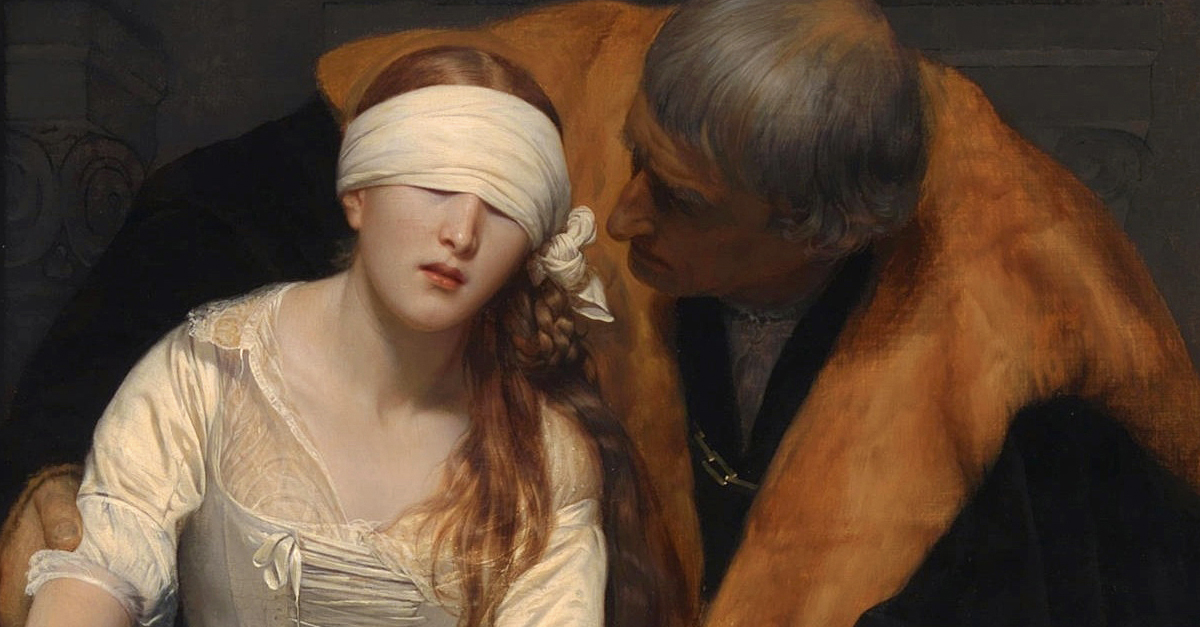
On February 12, 1554, Lady Jane Grey walked toward an executioner's block inside the Tower of London. She had briefly been Queen of England, but her reign had lasted just nine days before powerful enemies stripped her of the crown. Still only a teenager when she died, Jane became one of the most tragic figures in British royal history, and the story of how she reached the scaffold is even more disturbing than her final moments.
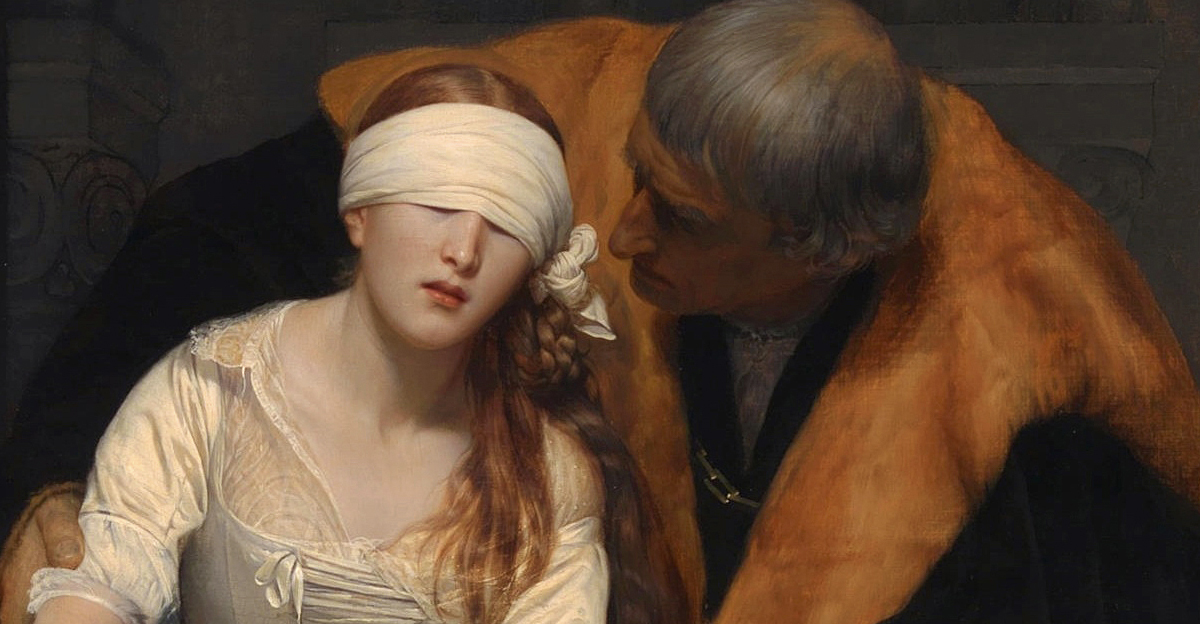 National Gallery, Wikimedia Commons
She Was Born Dangerously Close To The Throne
Lady Jane Grey was born in 1537, the eldest daughter of Henry Grey and Frances Brandon. Her mother was a granddaughter of King Henry VII, making Jane a great-granddaughter of the Tudor dynasty's founder. That royal connection gave her a place in England's complicated succession arrangements, although nobody could have predicted just how disastrous her position would become.
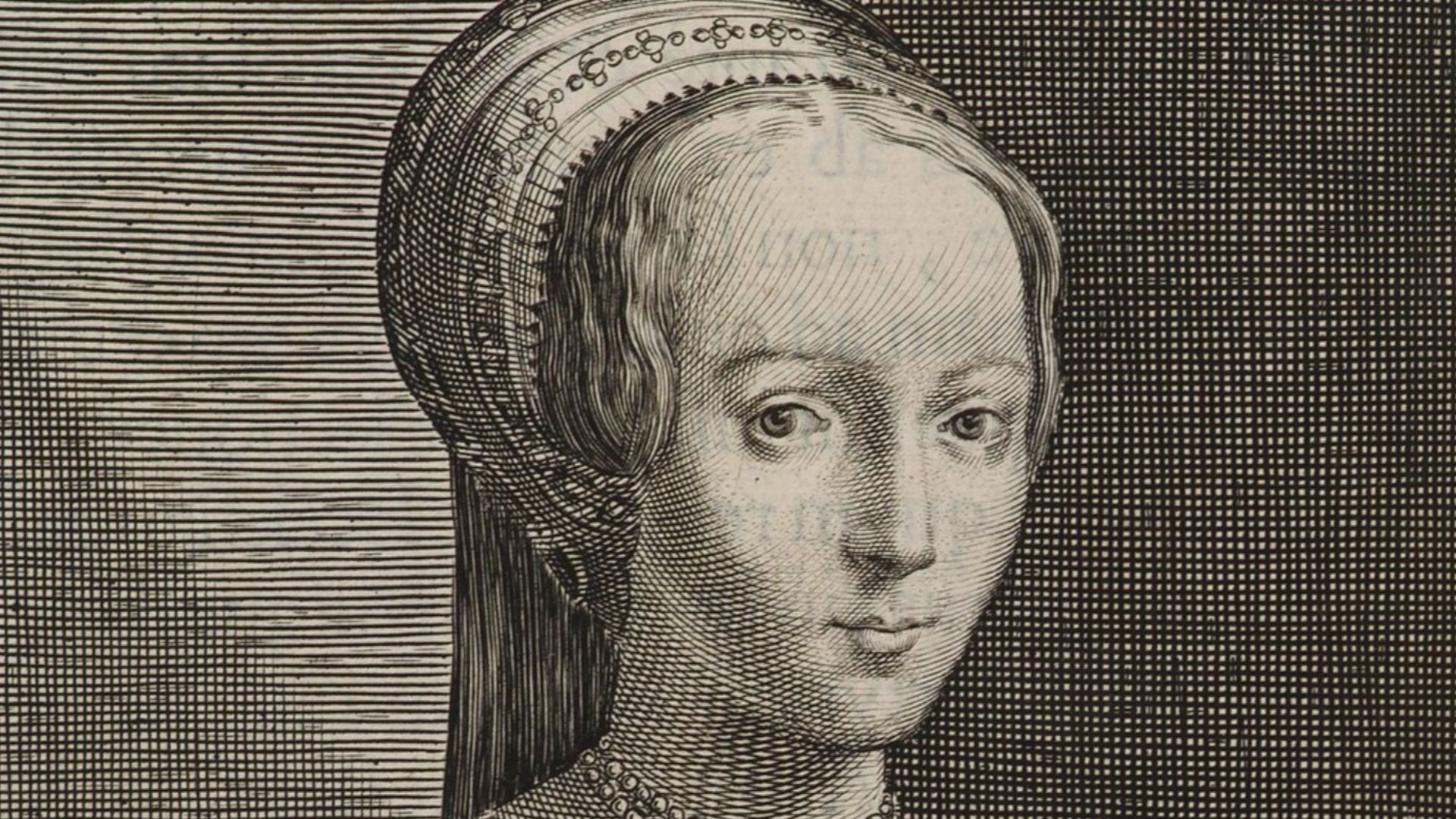 Magdalena van de Passe / Willem van de Passe / After Hans Holbein the Younger, Wikimedia Commons
Her Family Had Powerful Connections
Jane's mother was the daughter of Mary Tudor, the younger sister of Henry VIII. This made Jane a relative of Henry's three surviving children, Edward, Mary, and Elizabeth. Those family connections would eventually put her at the center of a dangerous struggle over who had the right to rule England.
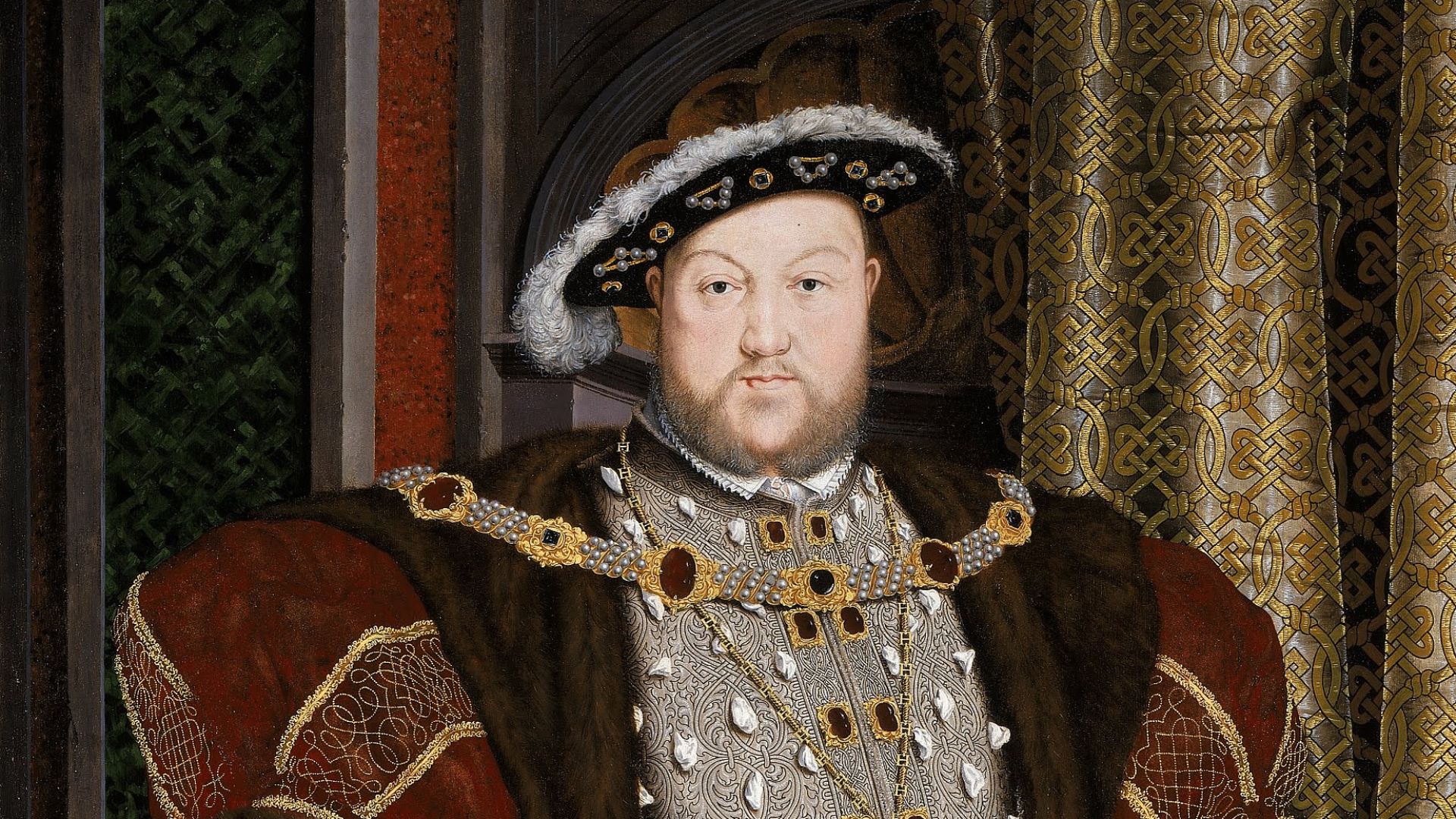 Workshop of Hans Holbein the Younger, Wikimedia Commons
She Was An Exceptionally Gifted Child
Unlike many girls of her generation, Jane received an extensive education that included the study of classical languages and religious texts. She developed a reputation for intelligence and scholarship that impressed some of the leading intellectuals of Tudor England. Her love of learning became one of her defining characteristics, but it offered little protection against the political ambitions surrounding her.
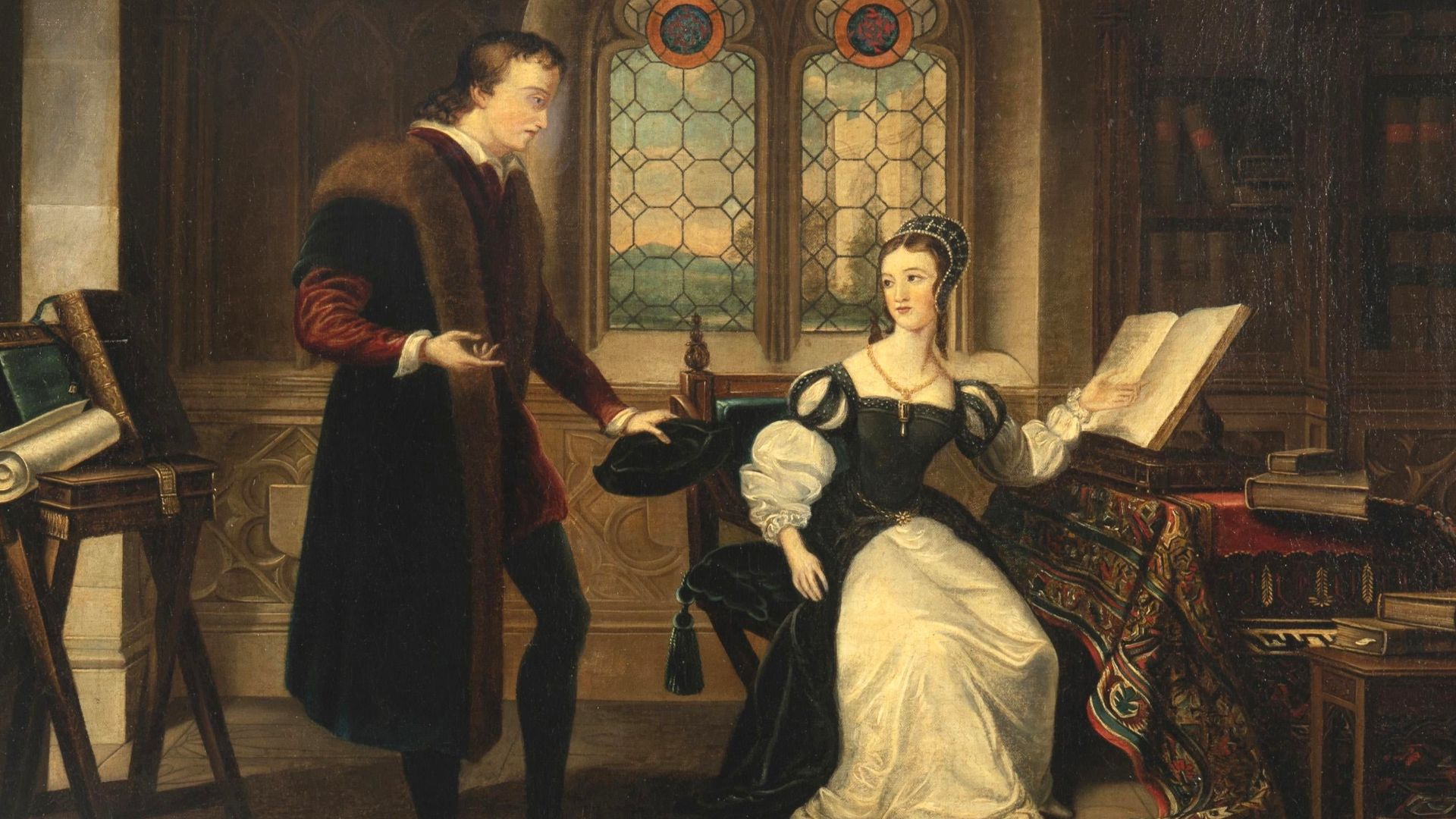 Andries Scheerboom, Wikimedia Commons
Her Childhood Wasn't Exactly Happy
According to the scholar Roger Ascham, Jane complained about the harsh treatment she received from her parents. In an account published years later, Ascham described finding her reading Plato in Greek while the rest of her household enjoyed a hunting excursion. Jane reportedly preferred studying because her tutor treated her more kindly than her parents, although historians must interpret this famous account with some caution.
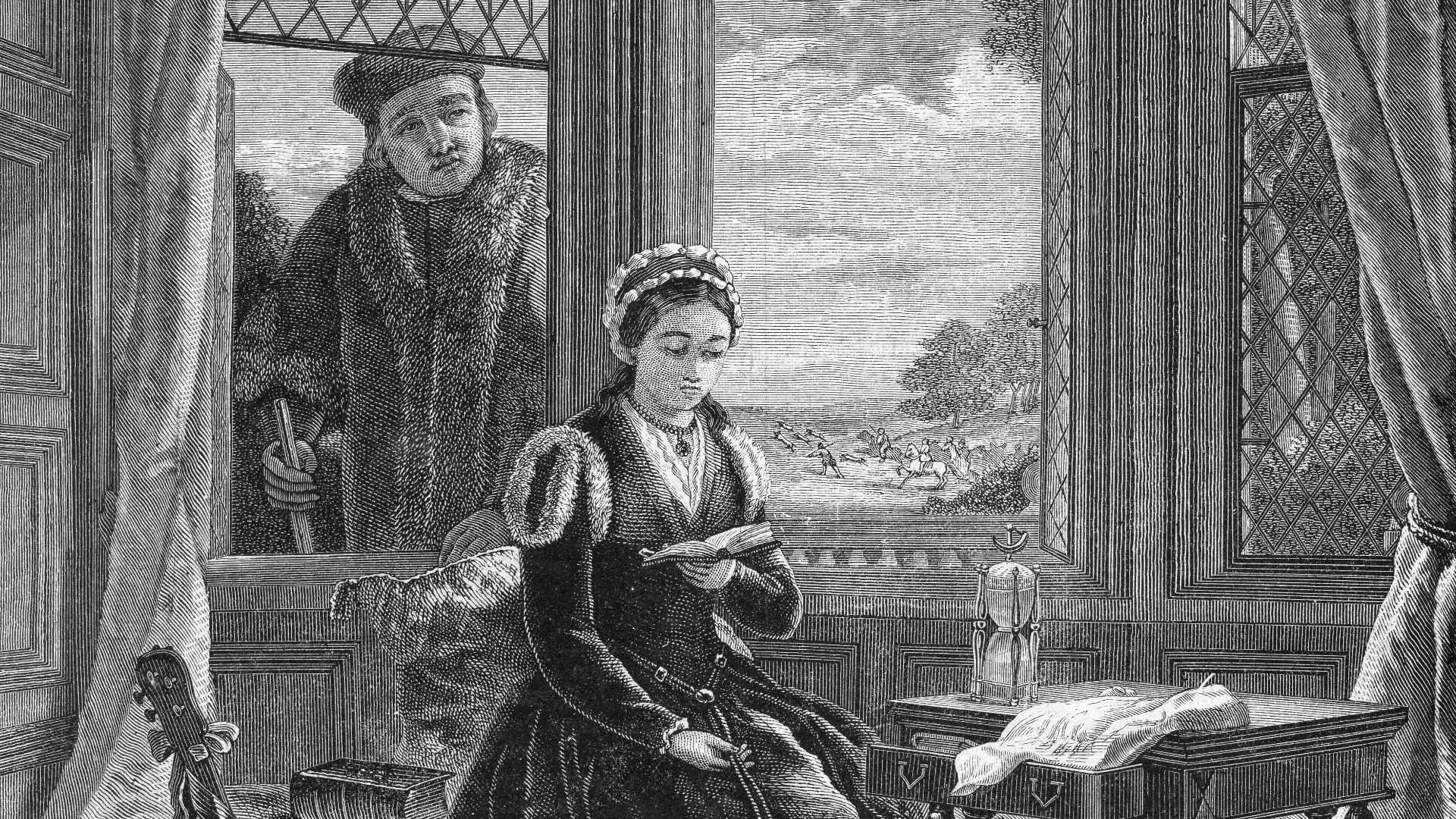 H.Bogaerts X.A Water, scan Havan(nl), Wikimedia Commons
She Found A Place In A Royal Household
As a child, Jane spent time in the household of Katherine Parr, the sixth and final wife of Henry VIII. Parr was an important supporter of Protestant religious learning and female education, making her household a significant influence on Jane's development. The young girl also became connected to Parr's subsequent husband, Thomas Seymour, who had ambitions of his own.
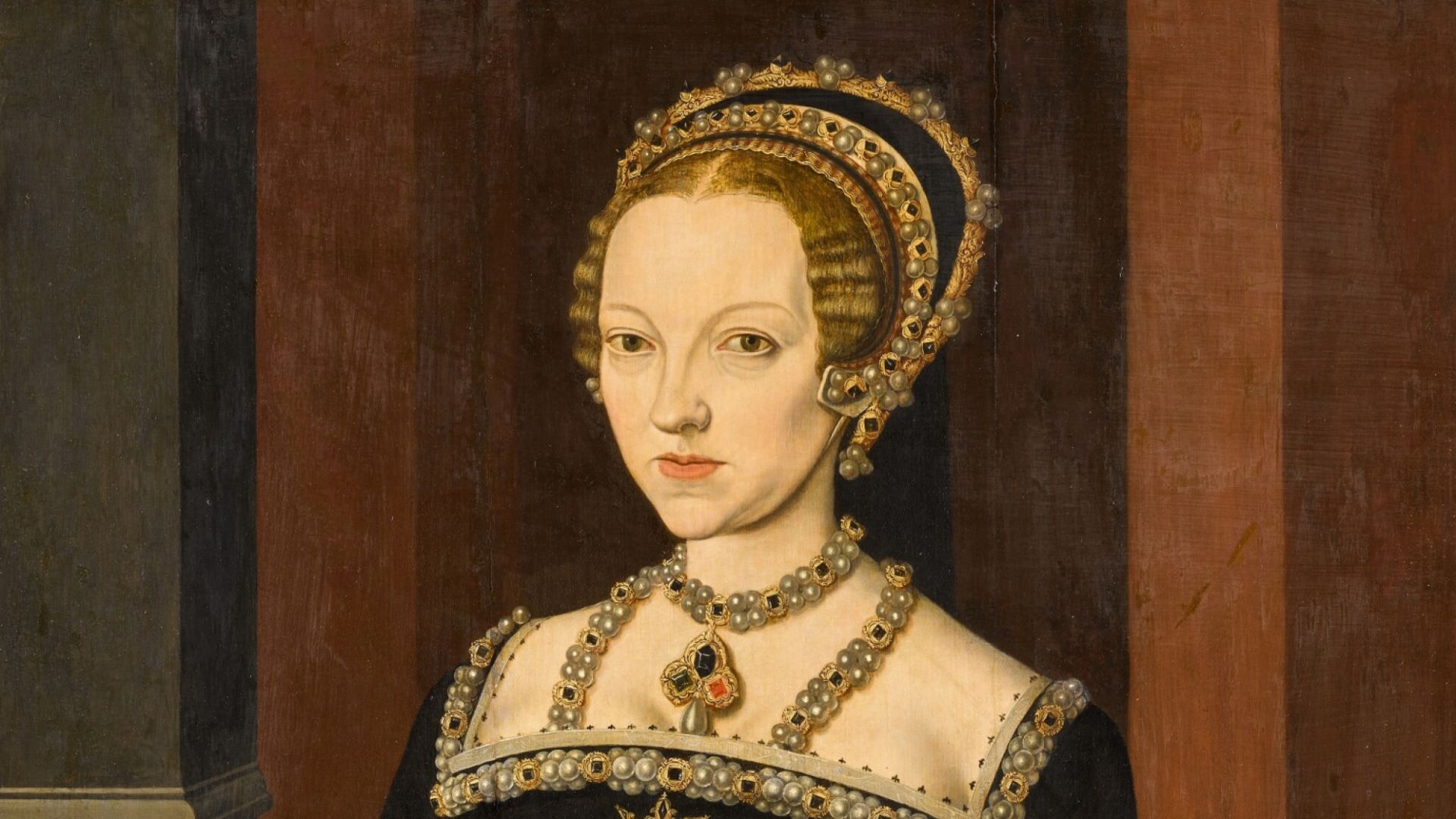 Attributed to Master John, Wikimedia Commons
A Royal Death Changed Everything
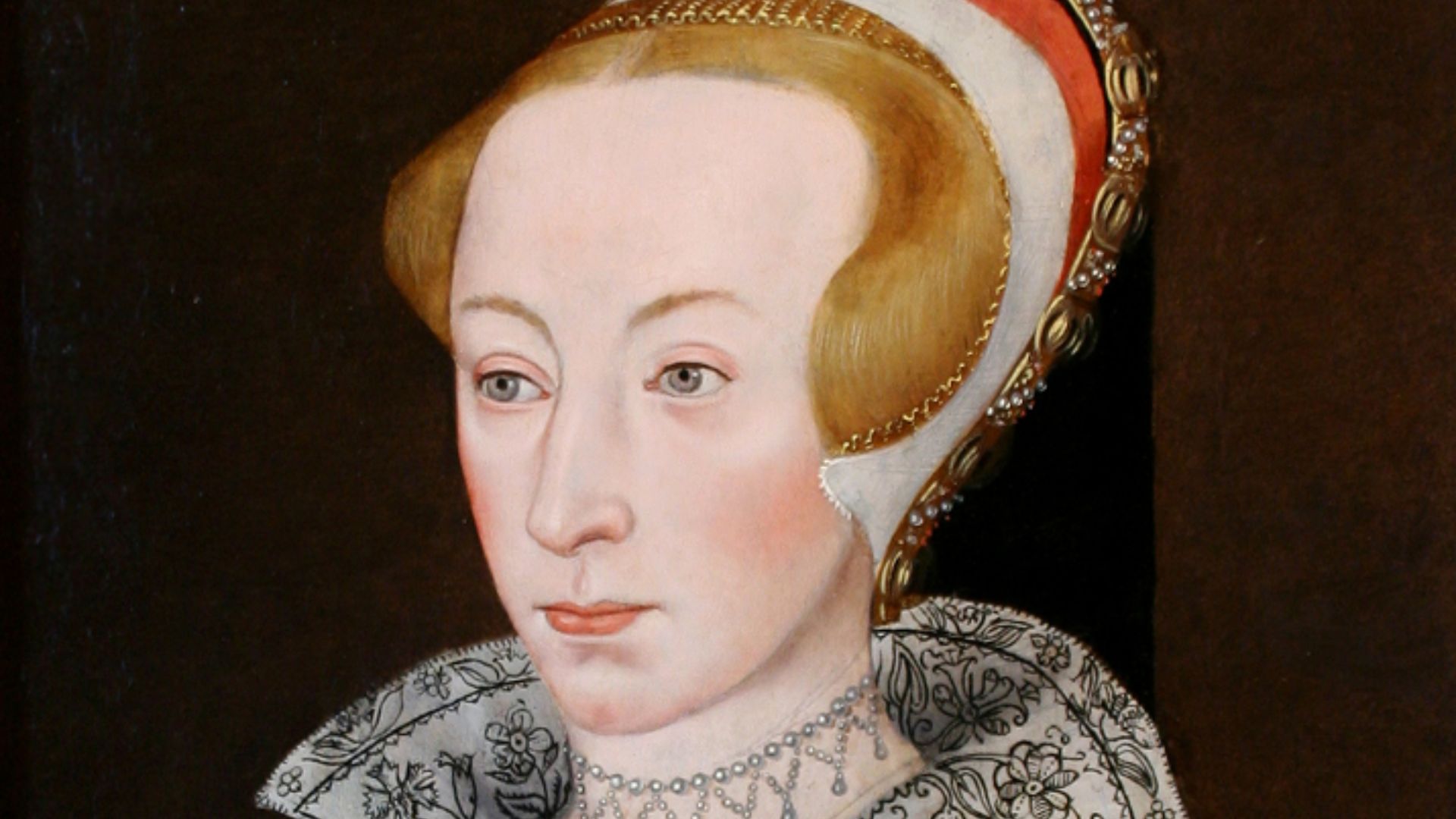
Katherine Parr died in September 1548, leaving Jane without a powerful female protector in the household. Thomas Seymour later fell from favor and was executed for treason in 1549, bringing another dangerous royal intrigue into Jane's young life. These experiences exposed her to the instability of Tudor politics long before she became a serious contender for the throne.
 Hans Holbein, Wikimedia Commons
England Was Divided By Religion
The English Reformation had transformed the country's religious and political landscape during the reign of Henry VIII. His son Edward VI pursued further Protestant reforms after becoming king in 1547, while Edward's older half-sister Mary remained a committed Catholic. These divisions mattered enormously because the next monarch would have the power to reshape England's religious future.
The Young King Was Dying
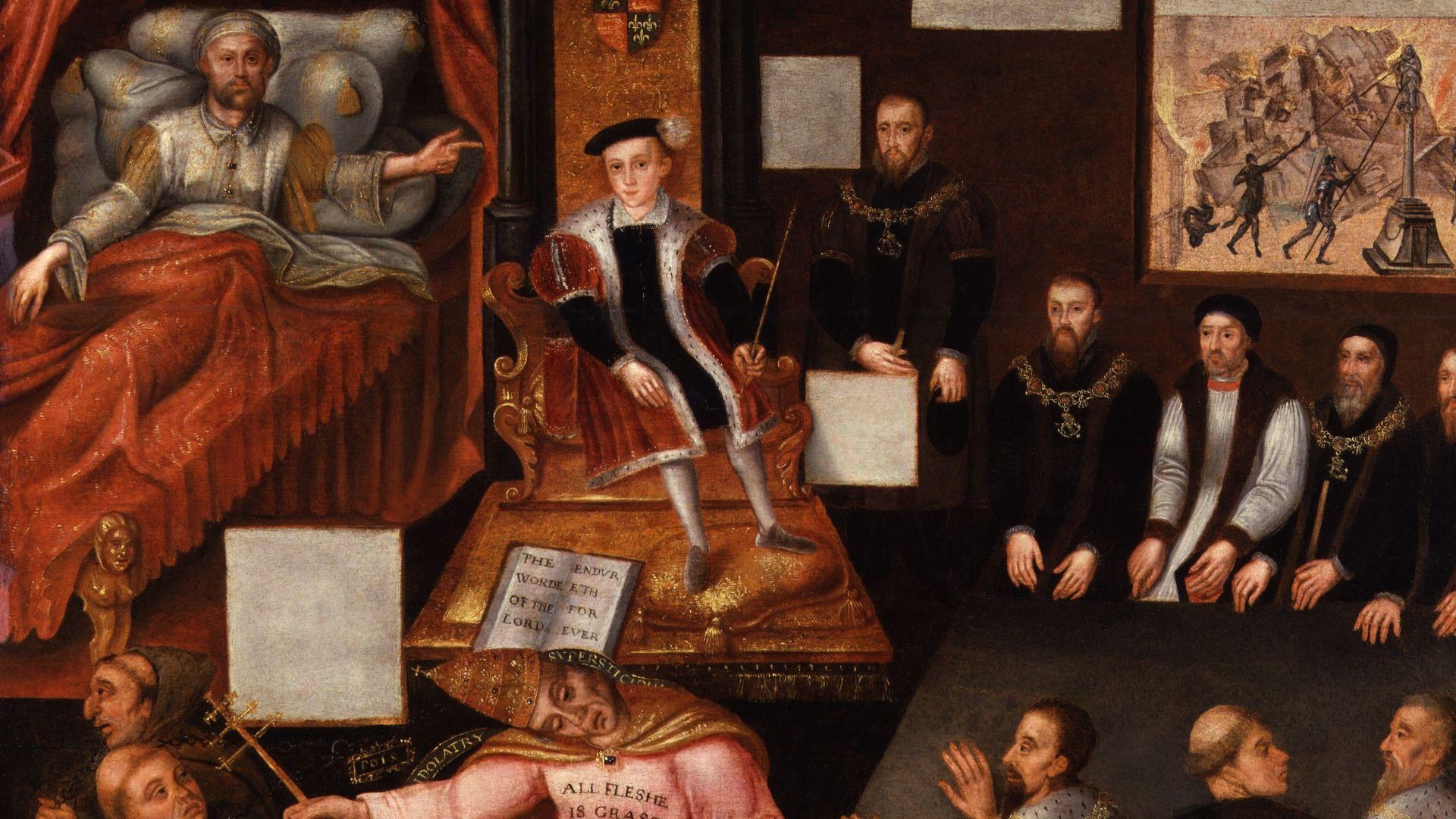
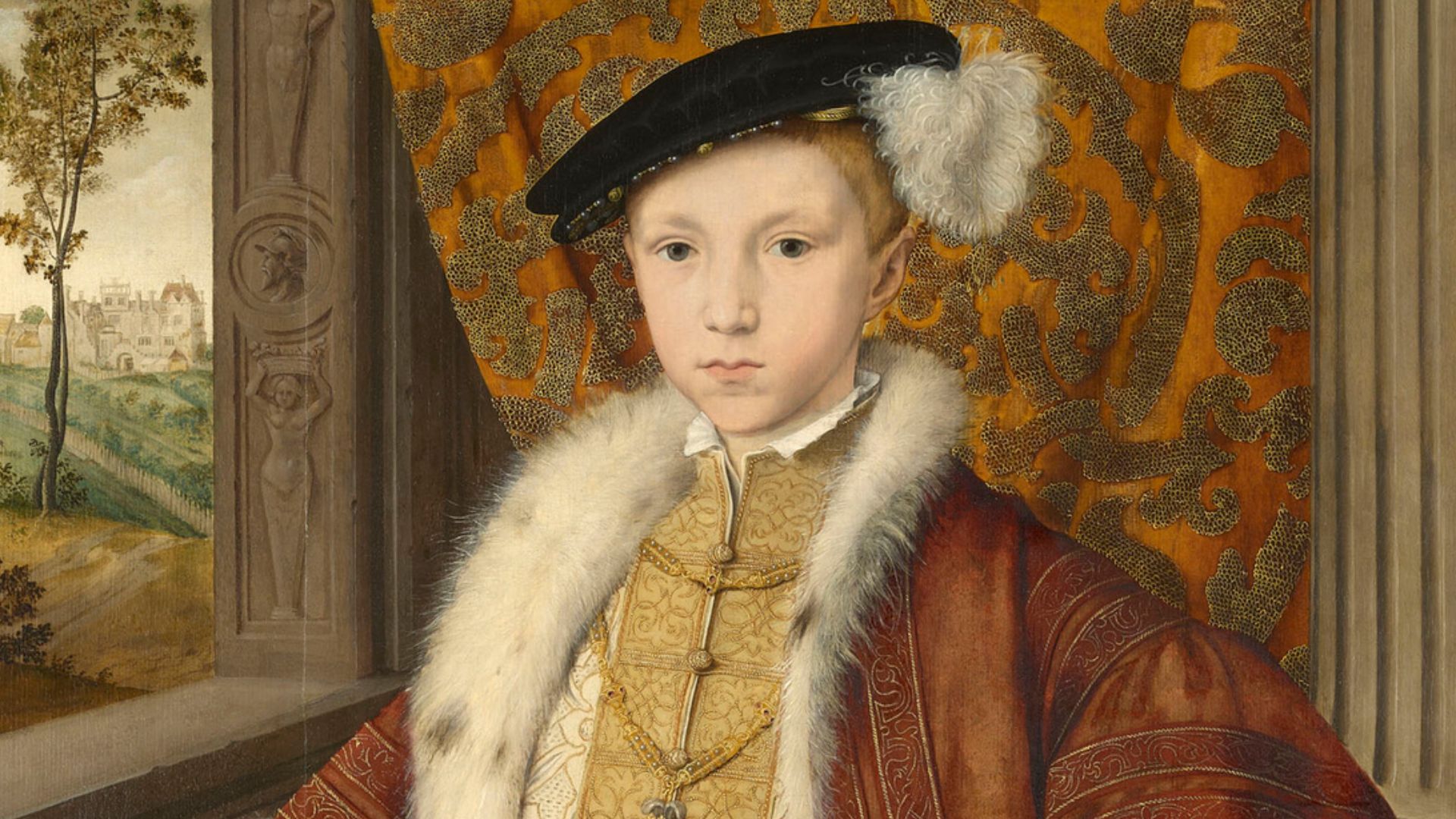
By 1553, the teenage King Edward VI was seriously ill, and the question of who would succeed him became increasingly urgent. Under the succession arrangements established during Henry VIII's reign, his half-sisters Mary and Elizabeth stood ahead of Jane. Edward, however, wanted to prevent the Catholic Mary from inheriting the crown, setting the stage for a political confrontation.
 William Scrots, Wikimedia Commons
A Powerful Duke Had Other Plans
John Dudley, Duke of Northumberland, was one of the most influential figures in Edward VI's government. Northumberland supported a succession plan that would place the Protestant Jane on the throne instead of Mary. His involvement carried an obvious personal advantage because Jane was about to become part of his family.
 Unknown authorUnknown author, Wikimedia Commons
Her Marriage Was A Political Arrangement
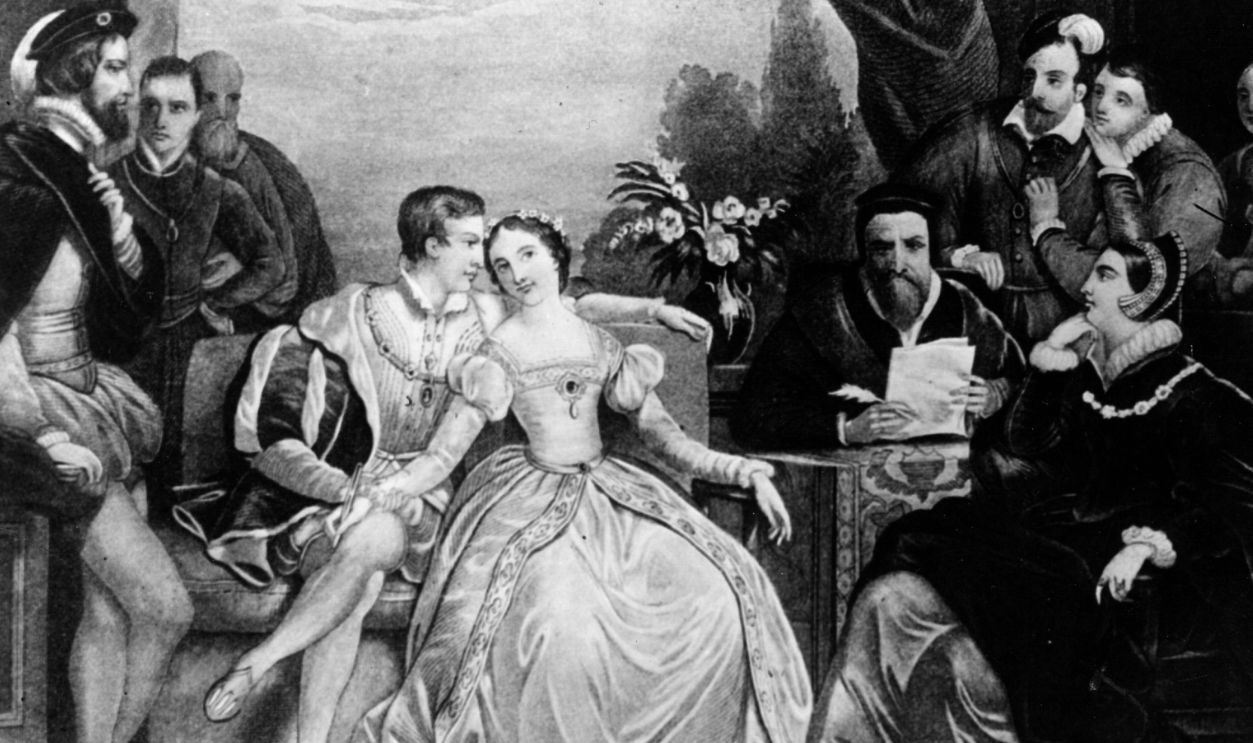
In May 1553, Jane married Lord Guildford Dudley, one of Northumberland's sons. The marriage created a direct connection between the powerful Dudley family and a young woman with a legitimate Tudor bloodline. With Edward VI's health deteriorating, the timing of the wedding made the union especially significant to England's political future.
The King Rewrote The Rules
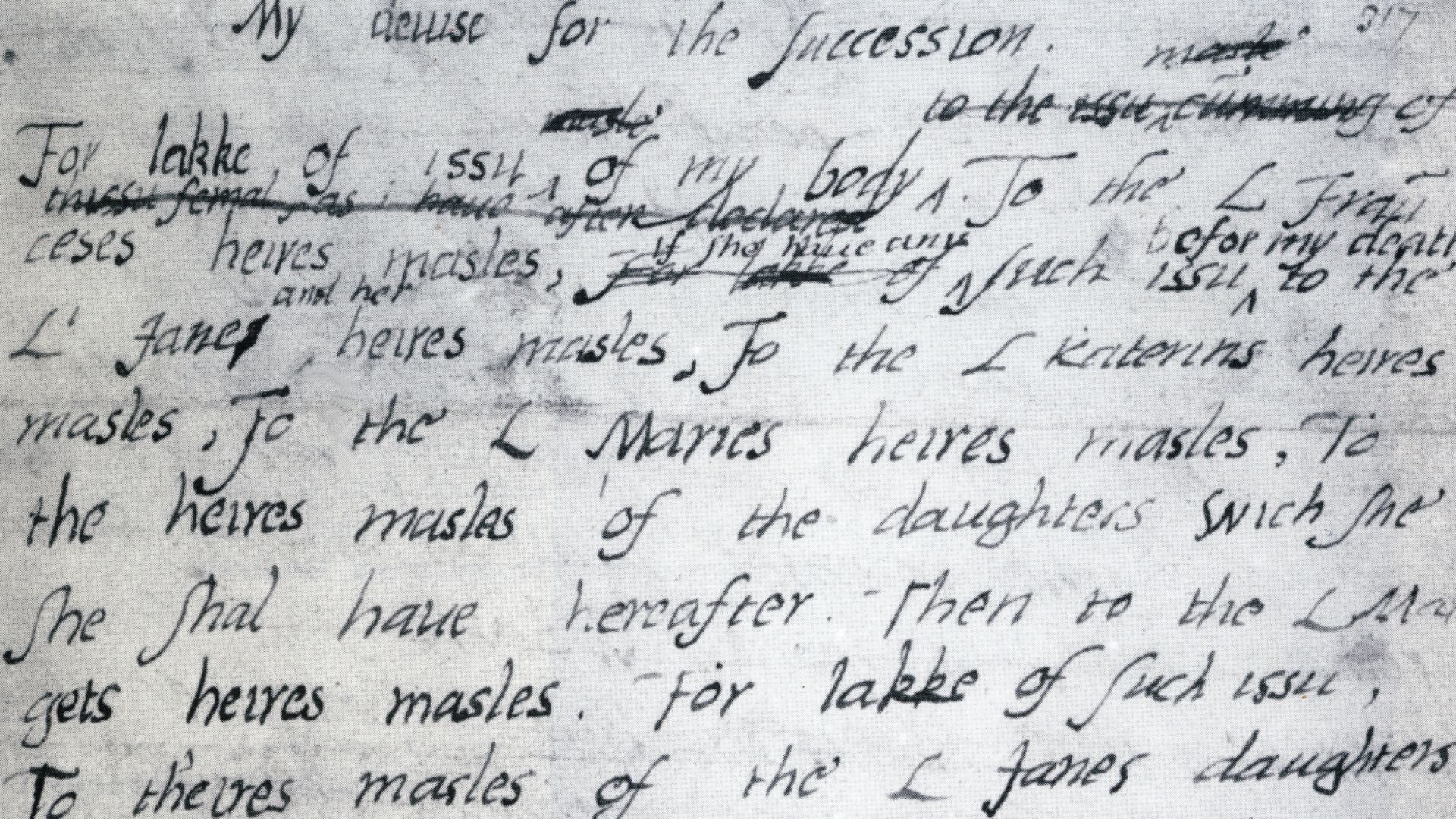
Edward VI prepared a document known as his "Devise for the Succession," attempting to redirect the crown away from his half-sisters. Early versions favored male descendants of the Grey family, but the arrangements were altered to name Jane herself as the intended successor. The plan challenged the succession legislation established under Henry VIII, creating serious questions about its legality.
 Edward VI of England, Wikimedia Commons
A Teenage Girl Was Suddenly Queen
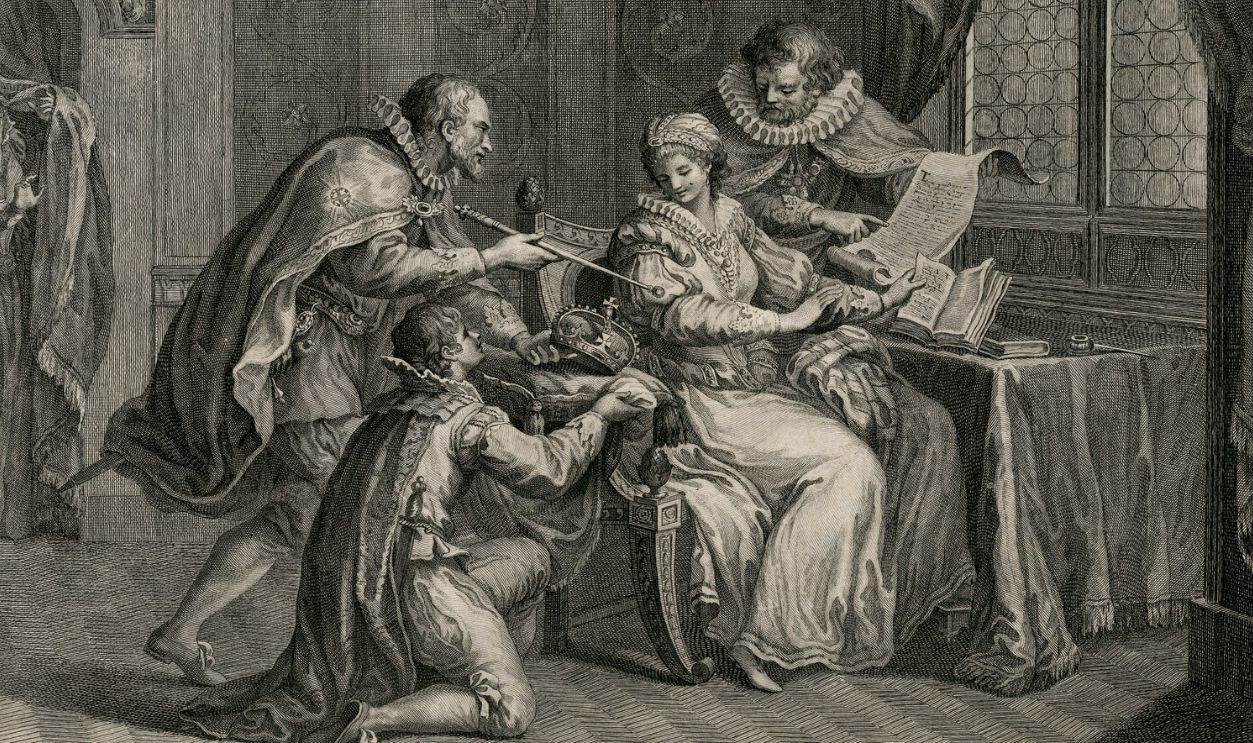
Edward VI died on July 6, 1553, leaving England facing a succession crisis. Jane was informed at Syon House that she had been chosen to inherit the crown, a development that reportedly distressed her rather than delighted her. Nevertheless, she eventually accepted the position, stepping into a conflict that would determine the rest of her life.
 Suntach, Antonio (1744-1828), Wikimedia Commons
Her Coronation Never Happened
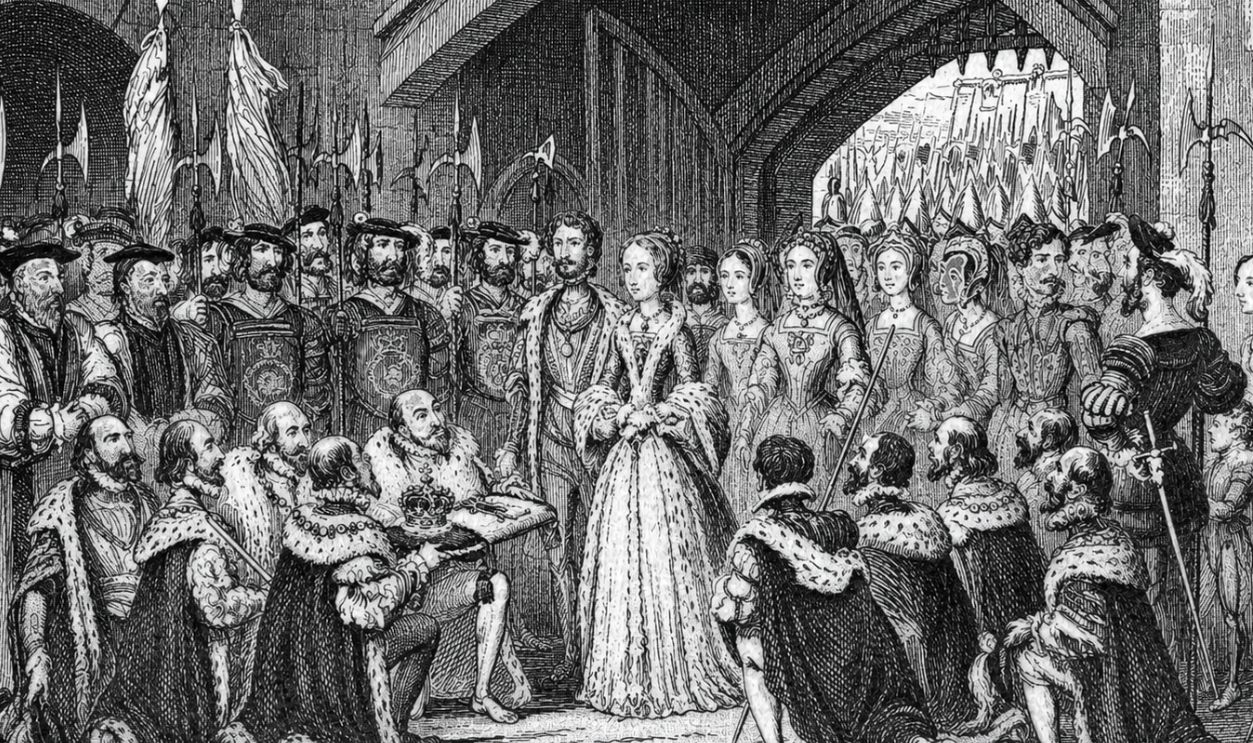
On July 10, 1553, Jane was formally proclaimed Queen of England in London. She entered the Tower of London in an elaborate procession, following the tradition of monarchs who stayed there before their coronations. Dressed in luxurious clothing and accompanied by powerful supporters, the teenage queen appeared to be preparing for a glittering reign, but the crown was already slipping away.
 Print Collector, Getty Images, Enhanced
Her Rival Refused To Surrender
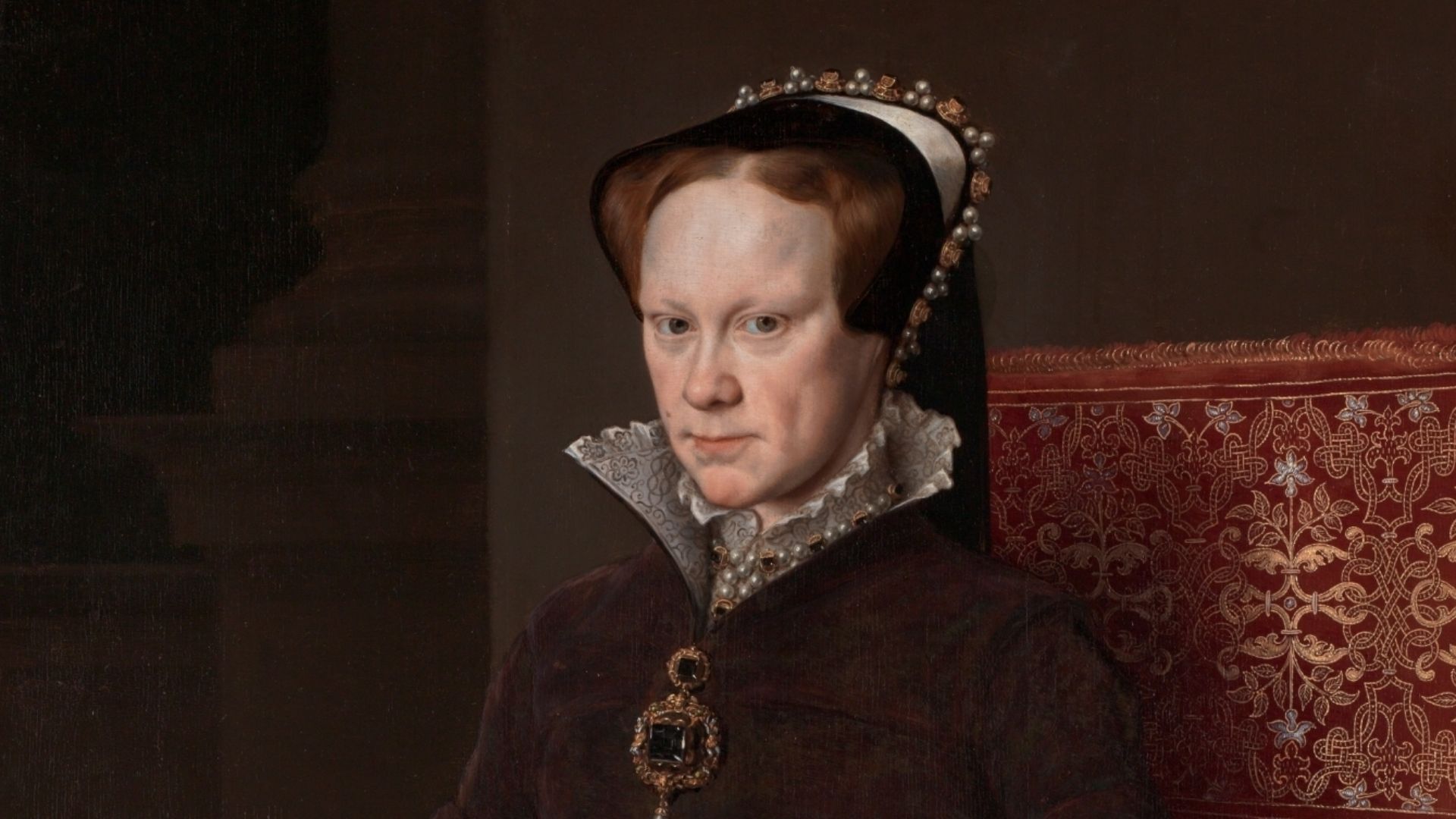
Mary Tudor had no intention of accepting Jane as England's rightful monarch. As Henry VIII's eldest daughter, Mary possessed a powerful hereditary claim backed by the succession arrangements her father had established. She gathered supporters and prepared to challenge the government that had proclaimed Jane queen.
 Antonis Mor, Wikimedia Commons
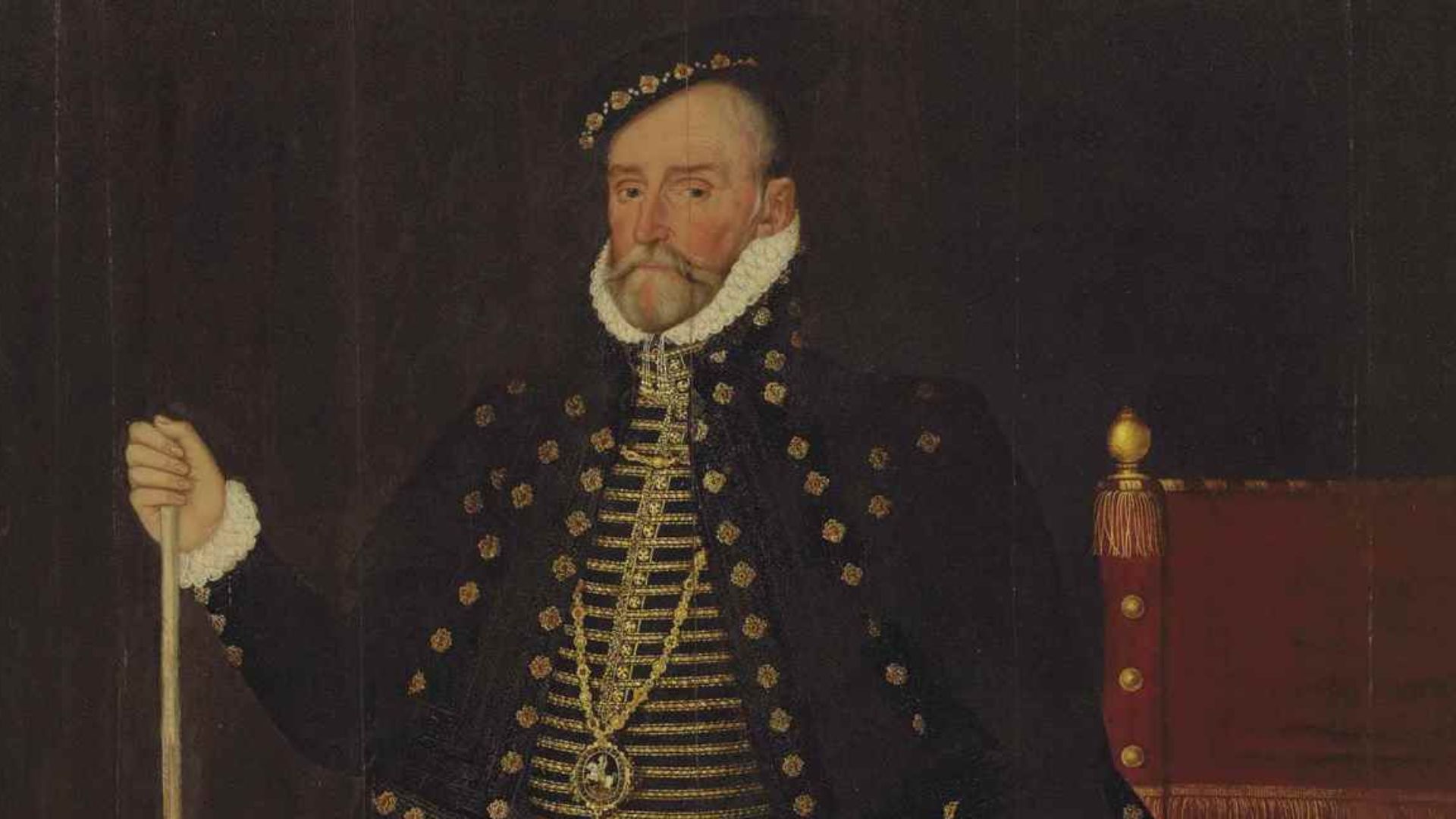
Her Supporters Started Abandoning Her
Northumberland attempted to suppress Mary's growing challenge, but political support for Jane began collapsing. Members of the Privy Council recognized that Mary was gaining strength and eventually switched their allegiance to her. Without the backing of the political establishment, Jane had little chance of maintaining her position.
 Unidentified painter, Wikimedia Commons
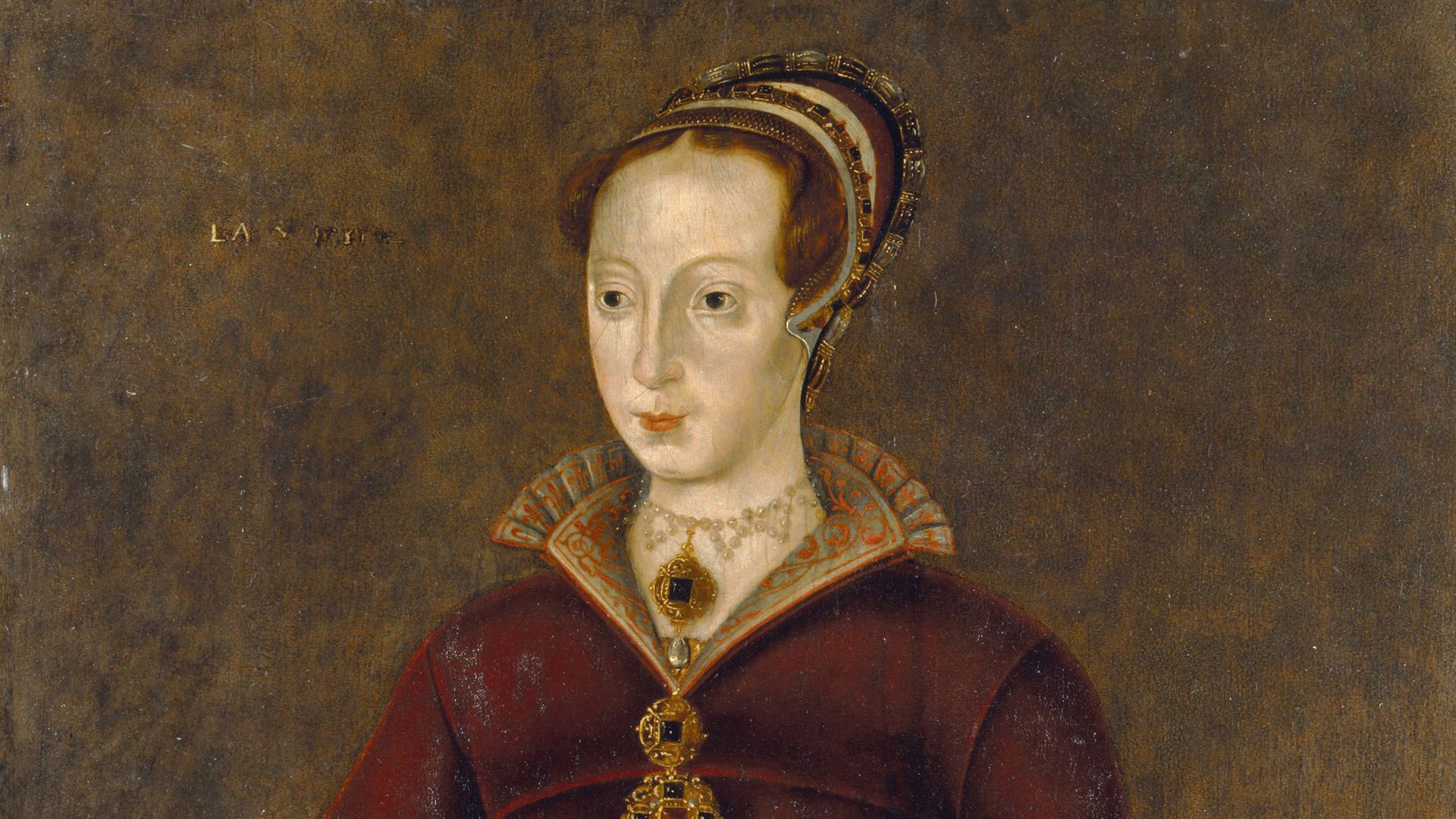
Nine Days Were All She Got
On July 19, 1553, Mary was proclaimed Queen of England, bringing Jane's extraordinary nine-day reign to an end. Even Jane's father abandoned her claim and recognized Mary's authority. The young woman who had entered the Tower expecting a coronation now faced the terrifying reality of being imprisoned there.
 Unidentified painter, Wikimedia Commons
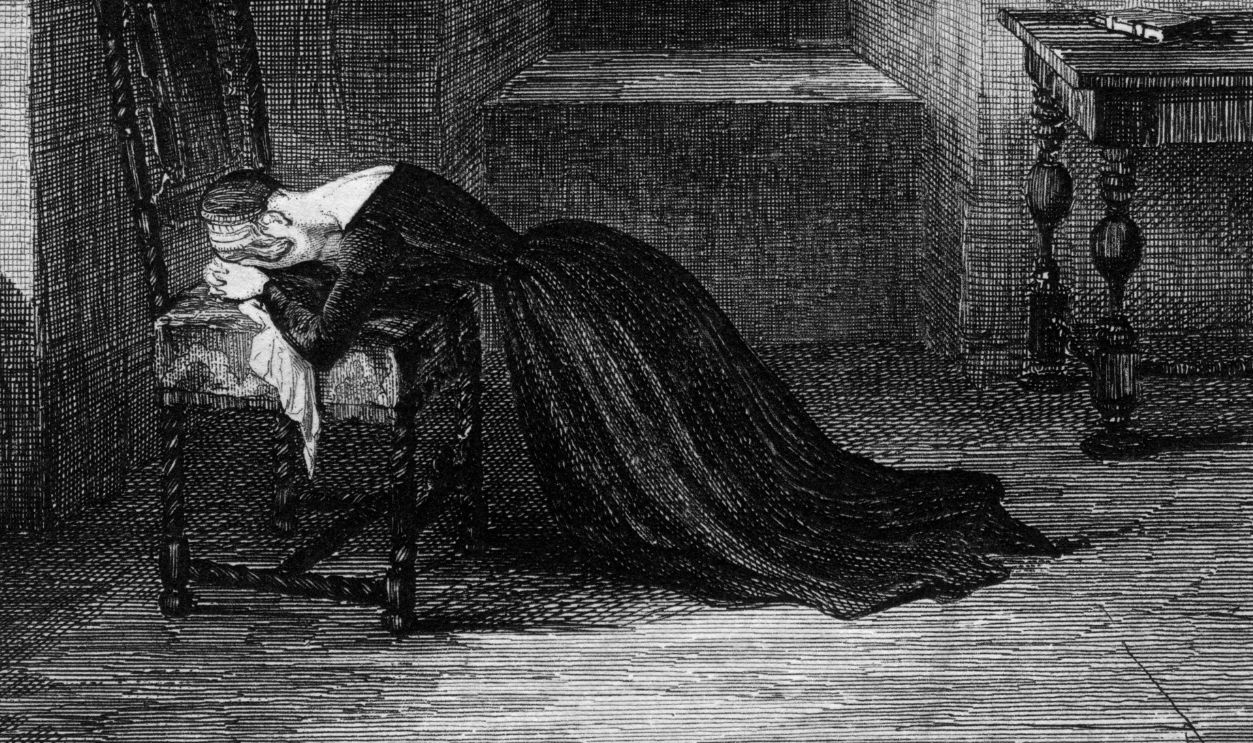
The Tower Became Her Prison
After losing the throne, Jane remained confined within the Tower of London alongside other members of the failed succession movement. Her imprisonment was relatively comfortable by the standards of the period, and she was allowed attendants and some freedom to walk in the gardens. Nevertheless, her future depended entirely on the mercy of the cousin whose crown she had briefly claimed.
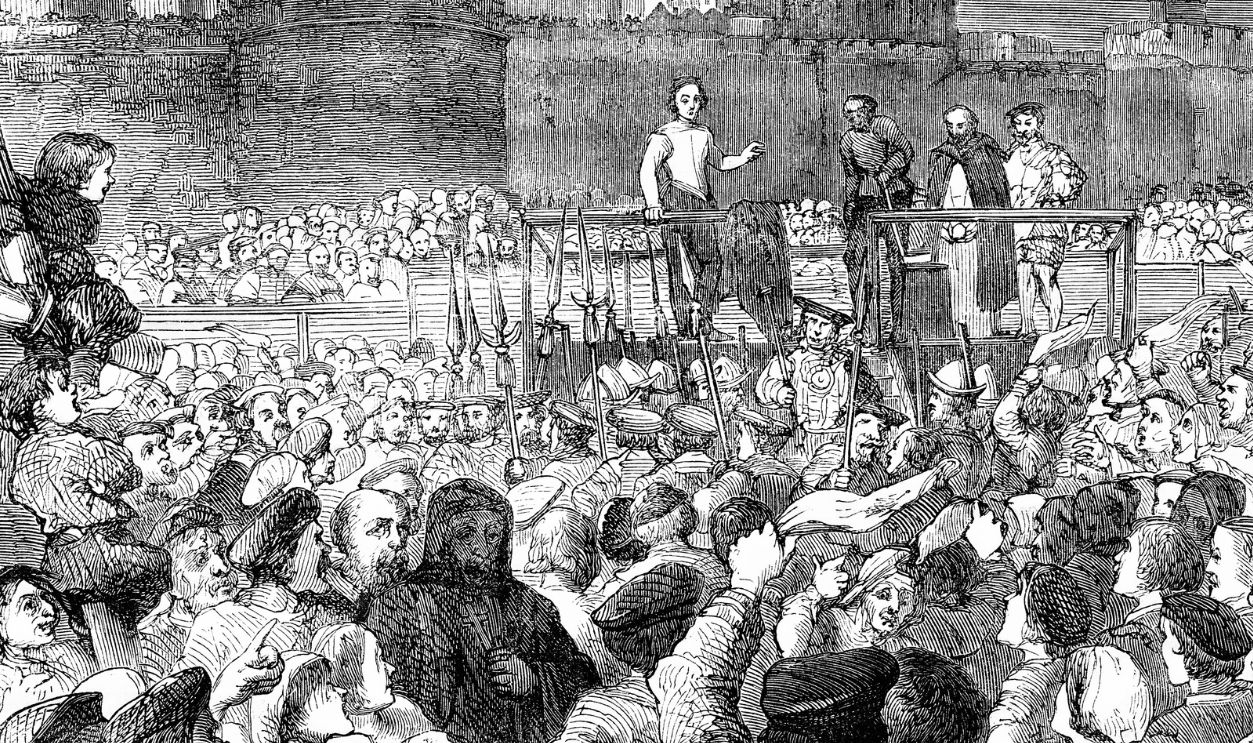
Her Father-In-Law Paid With His Life
Northumberland was arrested after the collapse of Jane's reign and subsequently condemned for treason. On August 22, 1553, he was executed on Tower Hill, becoming one of the first major casualties of the failed attempt to change England's succession. His death made the consequences of the conspiracy painfully clear, but Jane's own fate remained undecided.
 Universal History Archive, Getty Images
She Was Convicted Of Treason
In November 1553, Jane and her husband Guildford were tried for high treason and found guilty. The verdict carried a death sentence, putting both young prisoners under the threat of execution. Mary initially allowed them to live, however, suggesting that their deaths were not inevitable consequences of Jane's brief reign.
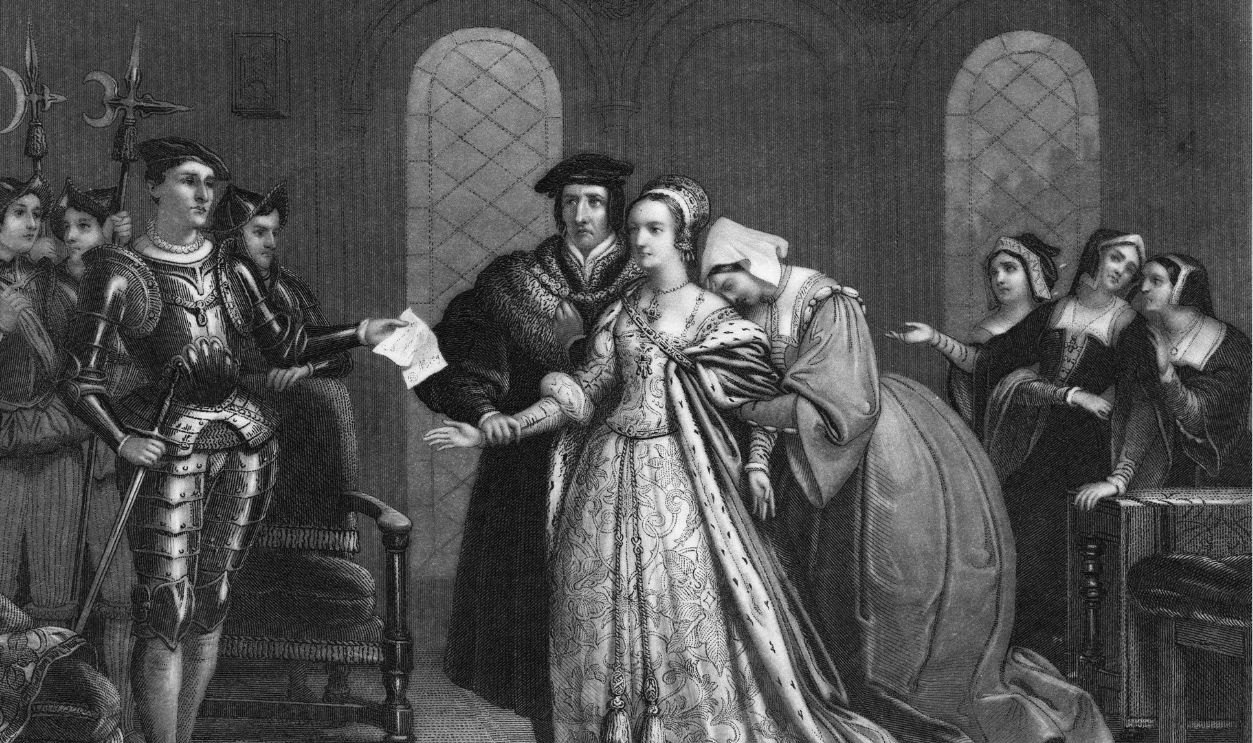
The New Queen Initially Showed Mercy
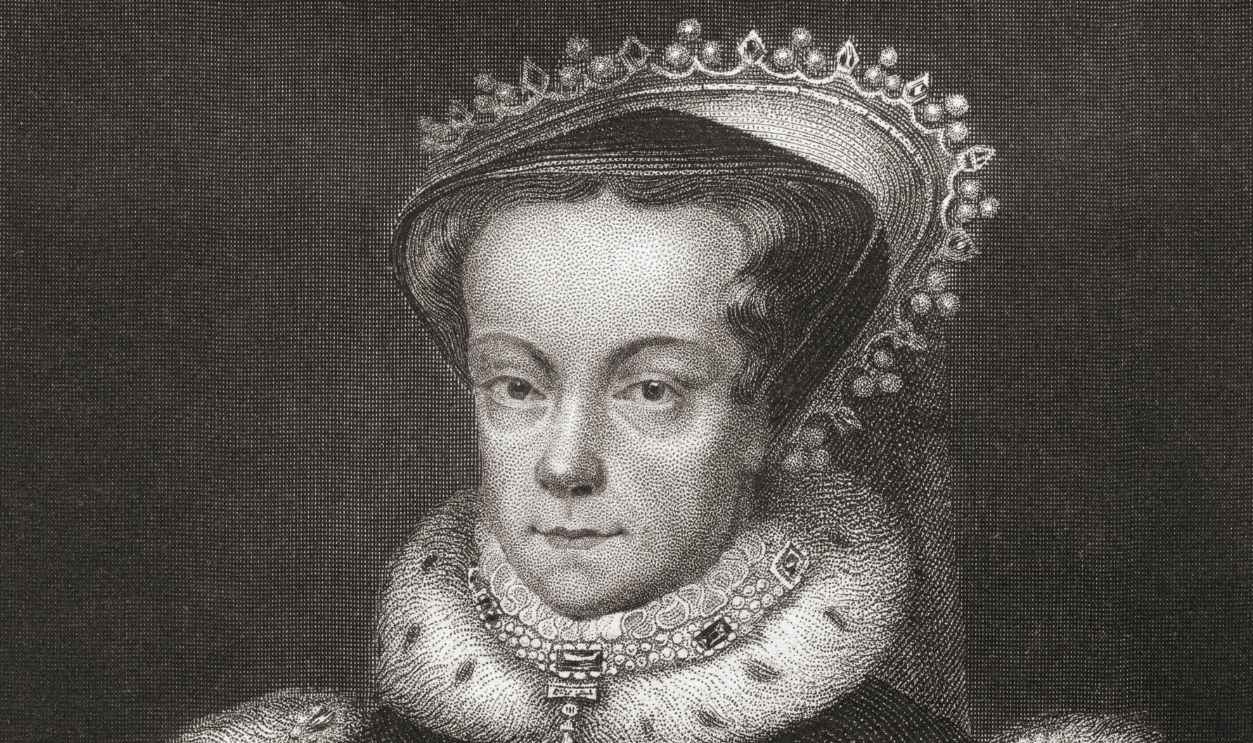
Mary I recognized that Jane had been drawn into the succession crisis through the actions of powerful political figures. Historic Royal Palaces records that Mary was reluctant to execute her young cousin and initially granted her a reprieve. For a time, Jane had reason to hope that she might survive the disastrous events of 1553.
 Universal History Archive, Getty Images
Another Rebellion Sealed Her Fate
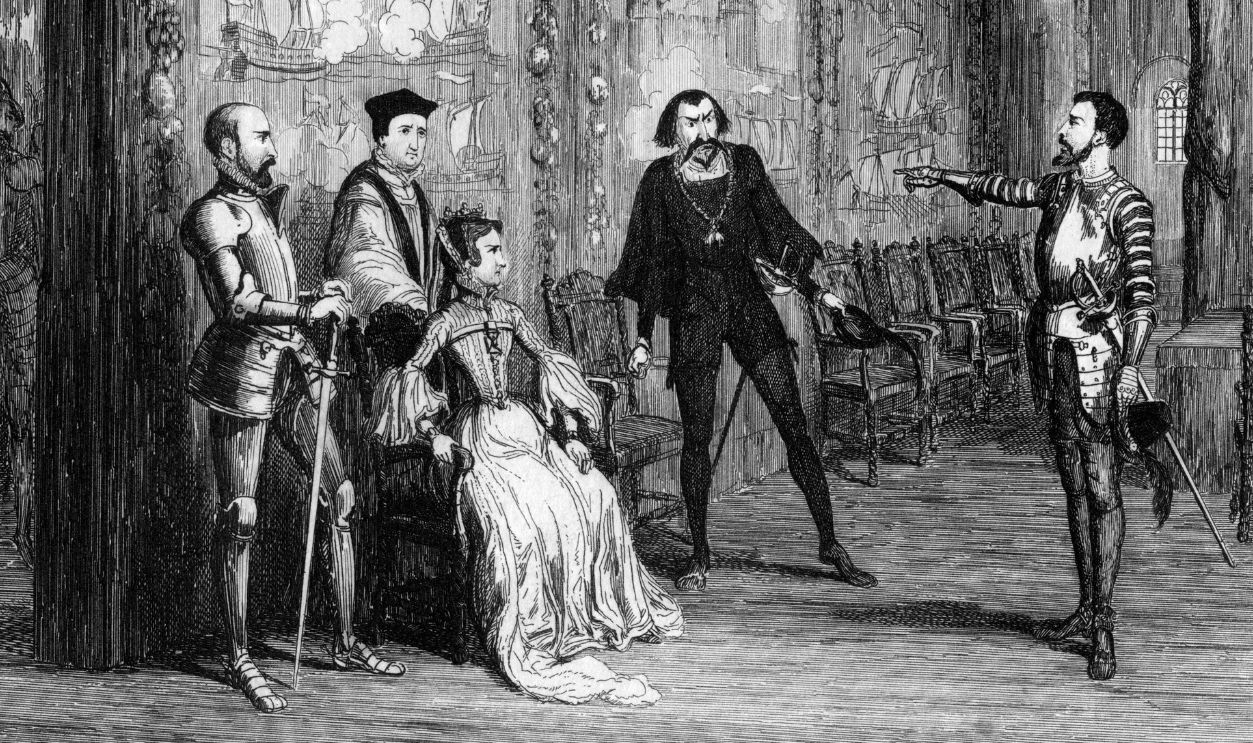
In early 1554, opposition to Mary's proposed marriage to Philip of Spain helped trigger a series of uprisings, including Wyatt's Rebellion. Jane's father, Henry Grey, became involved in the resistance, placing his already-imprisoned daughter in an even more dangerous position. Although the rebels were not necessarily attempting to restore Jane, her existence as a Protestant alternative made her a continuing threat to Mary's government.
She Refused To Abandon Her Faith
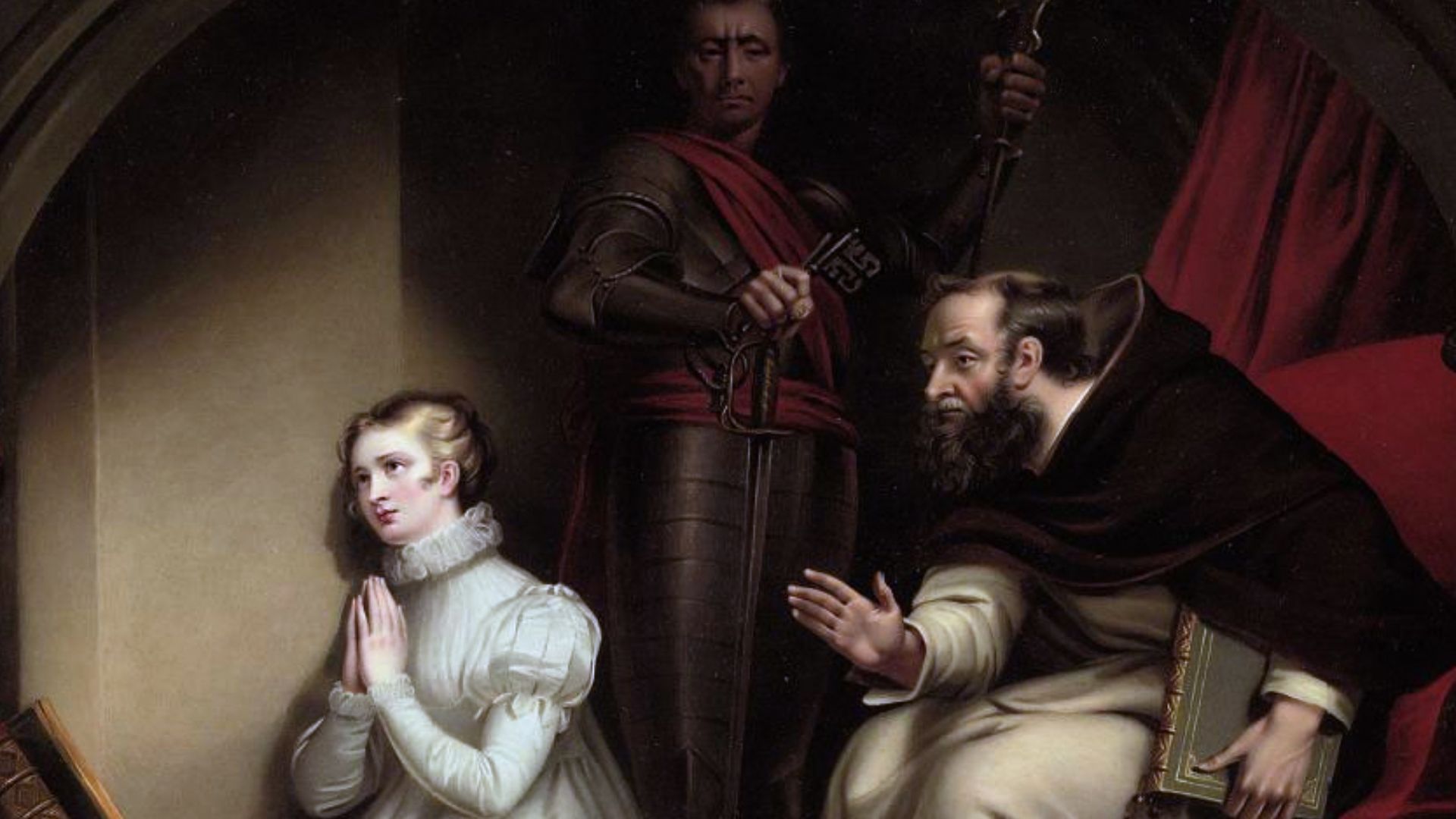
Jane's Protestant convictions remained central to her identity throughout her imprisonment. According to Historic Royal Palaces, Jane and Guildford were offered the chance to save their lives by converting to Catholicism, but both refused. Her religious commitment would later become a defining feature of the way Protestant writers remembered her death.
 Henry Pierce Bone / After James Northcote, Wikimedia Commons
Her Husband Was Executed First
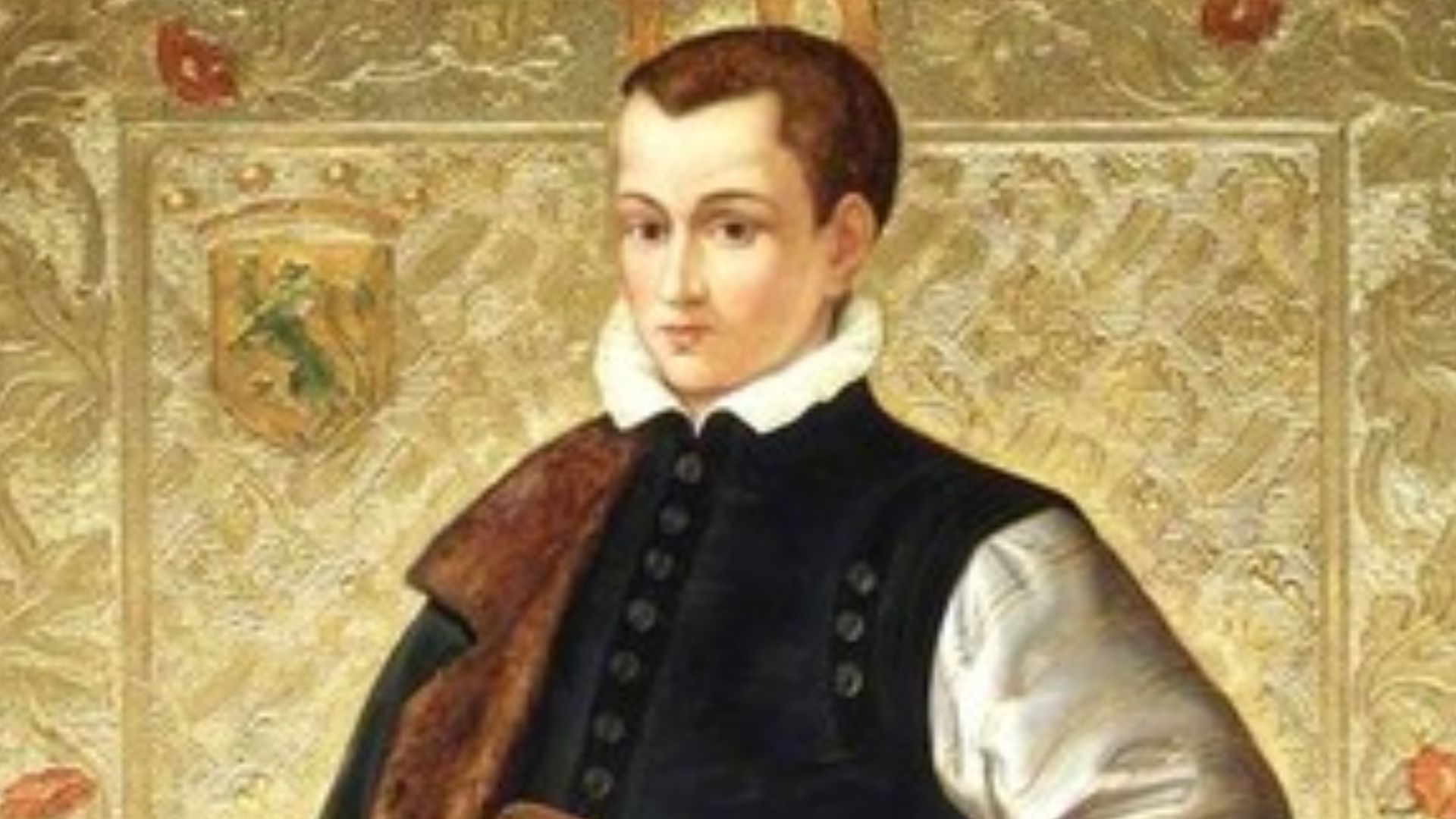
On the morning of February 12, 1554, Guildford Dudley was taken to Tower Hill for a public execution. He prayed before the assembled spectators and was beheaded, leaving Jane a widow shortly before her own death. Accounts of the day state that Jane saw his body being returned to the Tower, adding another heartbreaking detail to her final hours.
 Richard Burchett, Wikimedia Commons
She Faced A Different Kind Of Execution
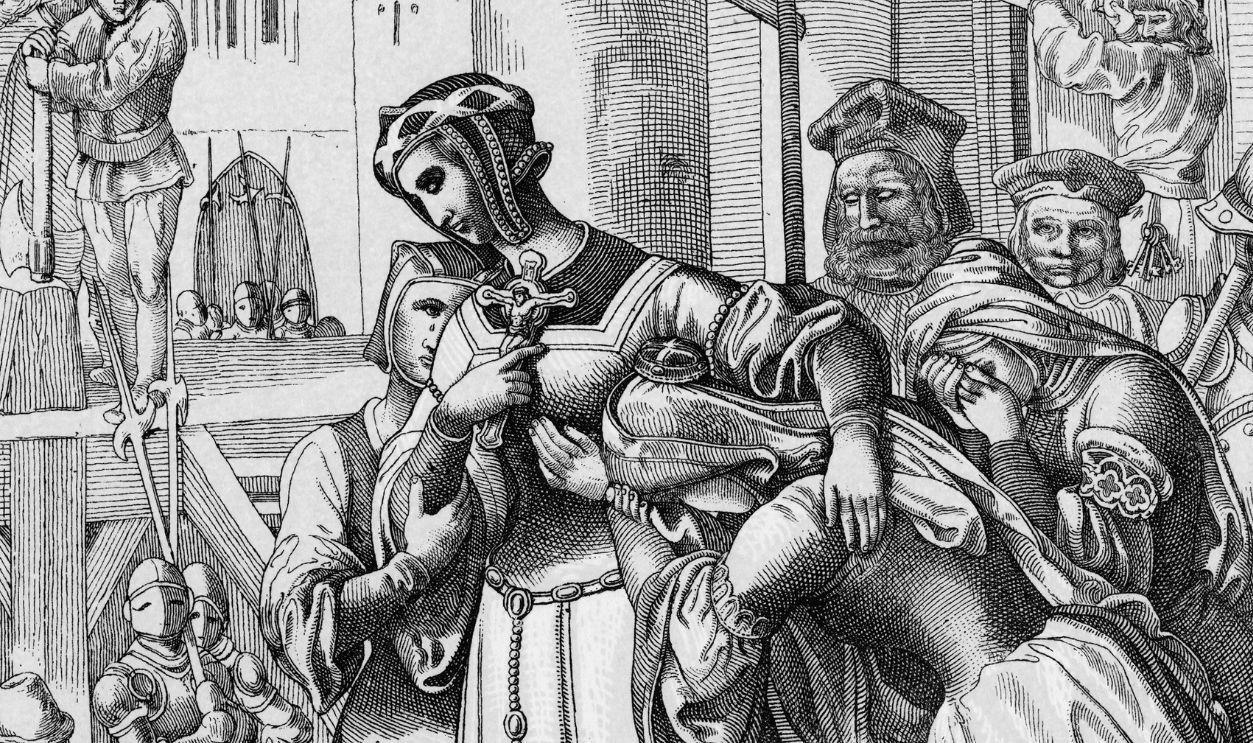
Unlike Guildford, Jane was granted a private execution within the Tower's grounds because of her high status. She was taken to a scaffold on Tower Green, away from the enormous public spectacle that often accompanied executions on Tower Hill. Her death was still witnessed and recorded, but the familiar image of Jane being executed before a vast crowd does not reflect what actually happened.
Her Final Words Were Remarkably Composed
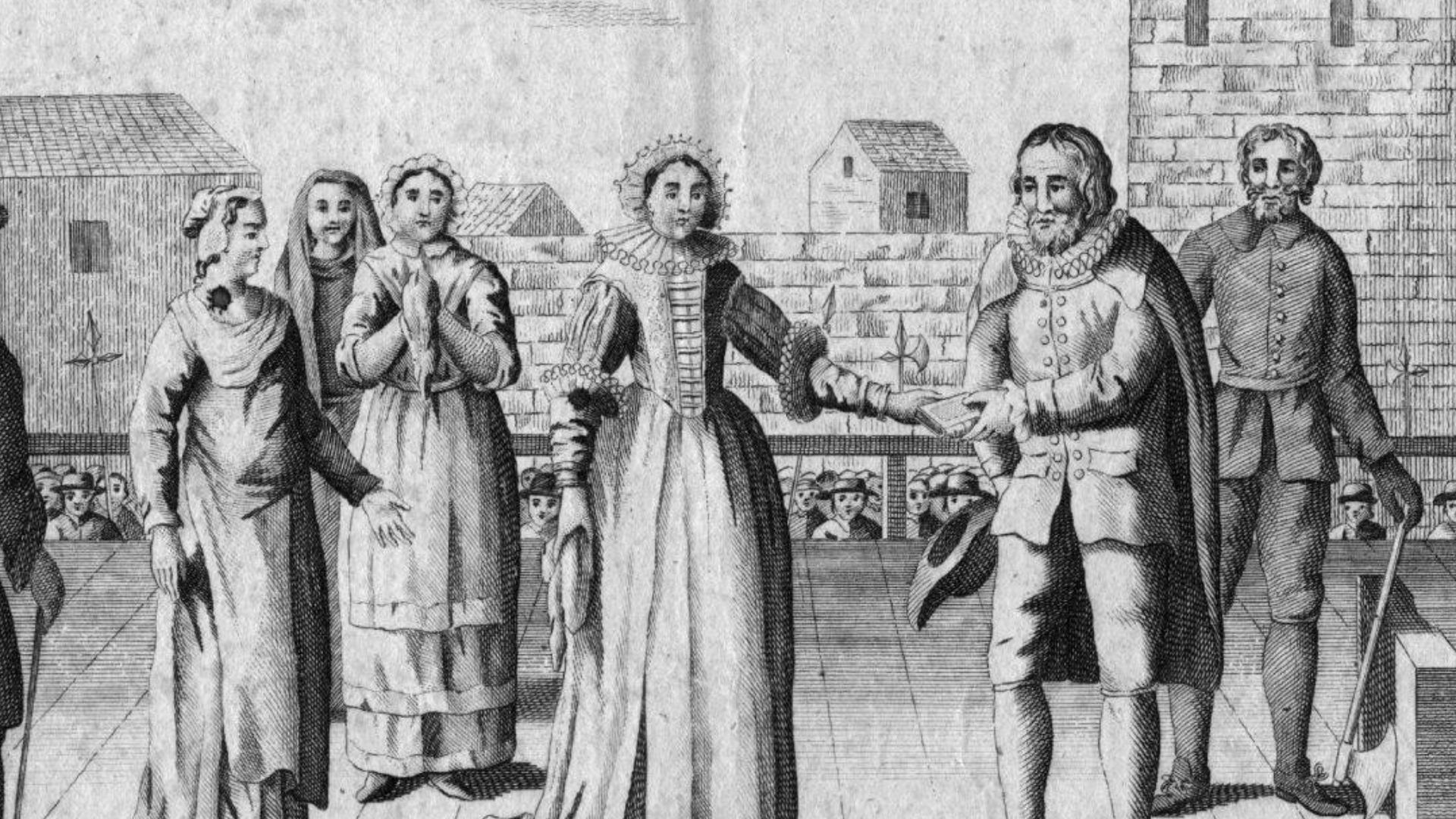
As Jane approached the scaffold, she addressed those assembled and acknowledged that she had been condemned under the law. She maintained that she was innocent of deliberately seeking to harm Queen Mary, even while recognizing the unlawfulness of the events surrounding her accession. She then read Psalm 51 from her prayer book and prepared herself for the executioner's axe.
 Compiled by Martin Madan, Wikimedia Commons
One Terrifying Moment Broke Her Composure
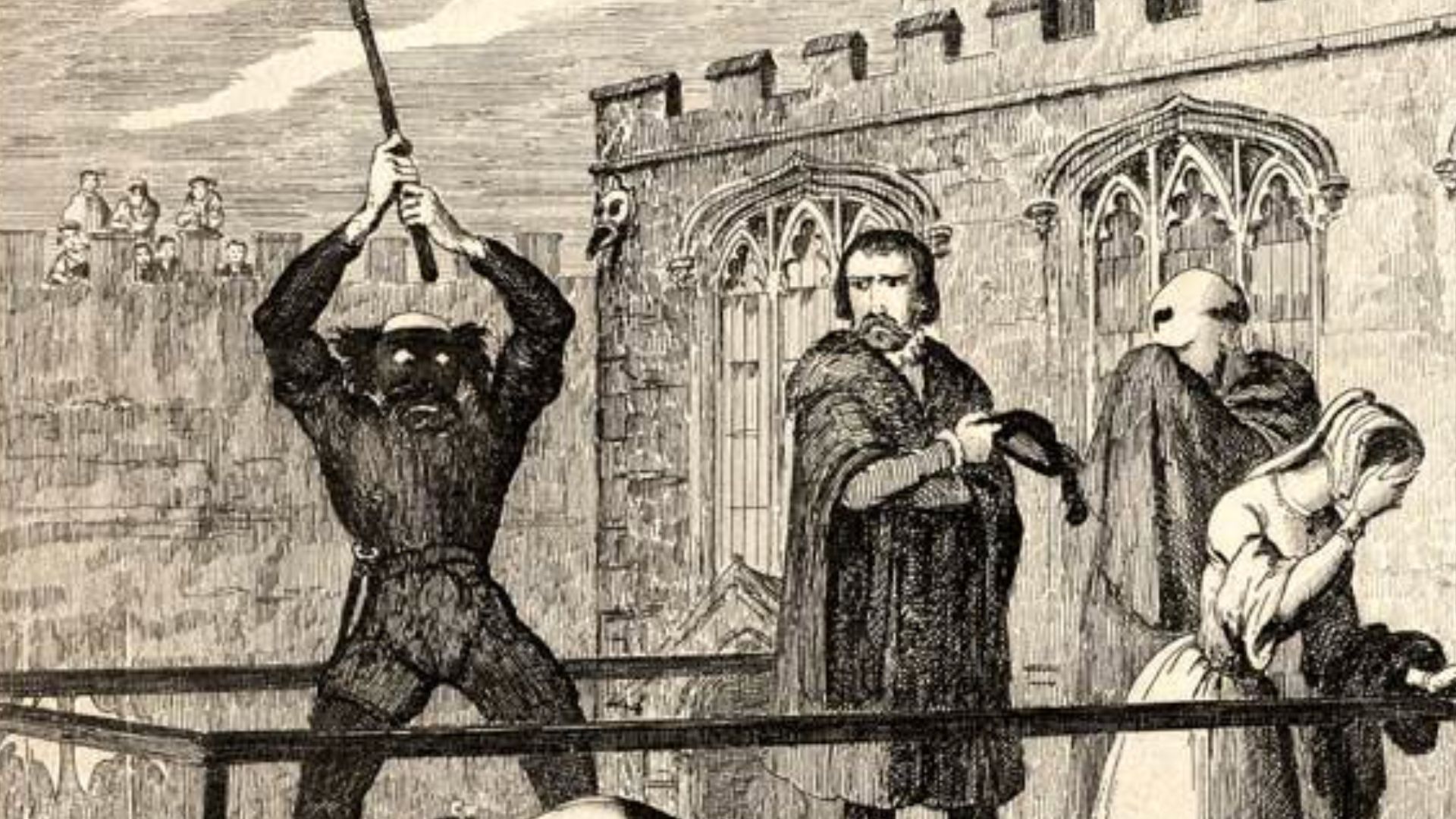
Jane removed her outer garments and placed a blindfold over her eyes before kneeling at the execution block. Unable to locate the block with her hands, she became distressed and reportedly cried out, asking where it was. Someone helped guide her into position, allowing her to deliver a final prayer before the executioner struck.
 Unknown authorUnknown author, Wikimedia Commons
Her Death Was Only The Beginning Of Her Legend
Jane was buried in the Chapel Royal of St Peter ad Vincula within the Tower of London, near the resting places of Anne Boleyn and Catherine Howard. Over the following centuries, Protestant writers celebrated her as a martyr, while later generations increasingly portrayed her as an innocent young woman destroyed by ruthless political ambition. The famous nineteenth-century painting by Paul Delaroche helped cement that tragic image, although it includes dramatic details that do not accurately reproduce the historical setting.
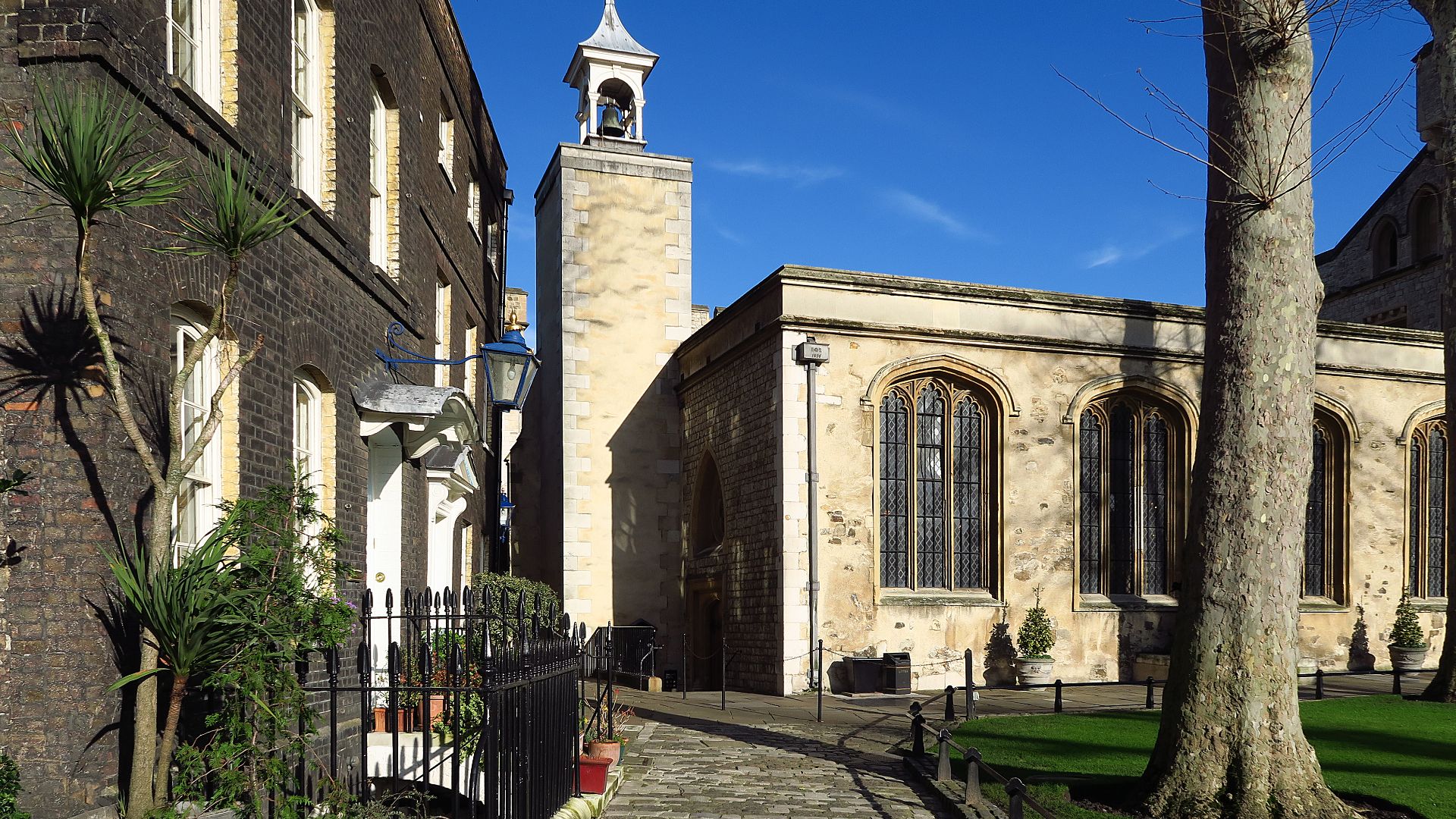 Michael Coppins, Wikimedia Commons
The Girl Behind The Legend Still Raises Questions
Lady Jane Grey remains one of the most fascinating figures of Tudor history because so much about her brief life is overshadowed by her extraordinary death. Historians continue to debate whether she was chiefly an unwilling pawn, a committed participant in the Protestant succession movement, or a complicated mixture of both. What is certain is that a teenager briefly occupied one of Europe's most powerful thrones, lost it in nine days, and paid for the struggle with her life less than seven months later.
 W Holl 1753, Wikimedia Commons
You May Also Like:
15 Rulers Who Defined The Tudor Dynasty